Surprising Help for Everyday Challenges
Neurodevelopmental challenges may not show up the ways you expect.
A few of Megan’s favorite books on Neurodevelopment.
If you have spent any time scouring the internet for resources on neurodevelopment, you will find, as I have, that they just aren’t readily available under that name. I am excited to share three of my favorite books on neurodevelopment. In terms of research, coherent thinking, and credibility, I think these authors have done their work. They give a helpful picture into the kind of work neurodevelopmentalists do, and I think they stand the test of time.
by Svea Gold
When seemingly “well” or “normal” children display poor function or behavior, adults can easily fault them for issues that are beyond their reasonable control. In this book, Gold covers a multitude of factors that may be affecting these children’s ability to function well.
From nutrition to hyposensitivity to head-righting reflexes and more, Gold presents a plethora of factors that could be silently causing academic issues, disruptive behaviors, and social problems. She covers a wide range of possible concerns affecting development from birth through adolescence, citing various studies throughout. With practical ideas and research- based solutions, Gold offers guidance for creating sensorimotor programs for development, dealing with high emotions, checking children for food allergies, and a whole host of other things. Her goal is to help adults deal with difficult children according to their specific needs, and not out of anger, frustration, or misunderstanding.
Gold’s book helps to explain how and why a sensorimotor neurodevelopmental program can apply to an apparently normal child.

by Marian Diamond and Janet Hopson
In Magic Trees of the Mind, Dr. Marian Diamond presents her research on enrichment for the brain. She uses her research on lab rats to demonstrate practical implications for the human brain. Her research concerns the brain’s cortex, ways it can physiologically change, and the result this has on intelligence.
Diamond describes the fascinatingly complex process of brain development beginning at conception. As she continues through each developmental stage, she discusses physiological brain growth, options for enrichment, and potential hazards for the brain.
A fascinating read, Magic Trees combines research about brain physiology with practical ideas to enrich children’s brains as they grow.
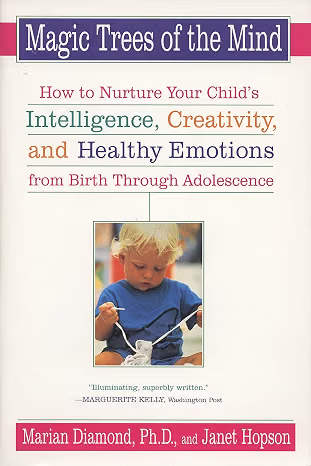
by Jane M. Healy
Educational psychologist Dr. Jane Healy also talks about brain plasticity, in fact citing Marian Diamond (above). Her writing suggests that not only individual brains can change, but generationally, brains can transform, from one group of children to the next.
Healy discusses the impact that good language skills and clear thought have on each other. Through language, parents shape their children’s view of reality and have the opportunity to increase their children’s ability for abstract thought. Healy spends some time on theories about the ever-increasing prevalence of learning disabilities, inability to pay attention, and underdeveloped executive function, but she also discusses the importance of conversation for shaping the brain and developing skills needed for education. It is imperative that students have parents and teachers who will teach them not only knowledge, but high-level reasoning, creativity, and wisdom.